Key & Padlock Accountability
K-TRACS.
Turn-key, stand-alone accountability for keys and padlocks — person-linked custody, DA Form 5513 on demand, and a key box that inventories in seconds.
K-TRACS control mark
Key and padlock accountability built for inspection-ready custody.
The K-TRACS mark anchors the full key-and-padlock workflow: person-linked issue, overdue visibility, key-box inventory, DA Form 5513 reporting, and a record that is ready before the inspection starts.
Live demo · the key and padlock loop
K-TRACS in action.
Interactive workflow preview: scan the customer, verify they're authorized, then scan the key or padlock tag. Watch an unauthorized controlled-space draw get denied, sweep the box with RFID, close the day, and generate the DA Form 5513. Tap a badge, then a key or padlock.
K-TRACS v3 READY · SCAN CUSTOMER BADGE TO BEGIN
Authorized personnel · badge + PIN
Key & padlock board · KB-1 / KB-2 · 6 tracked items
As fielded: the turn-key kit — semi-ruggedized touch tablet, laser printer, tethered scanner, preprinted aluminum barcode labels and key rings.
Operational reality
The inspection shouldn't be a judgment call.
Keys, padlocks, and combinations are issued, received, and maintained by hand — and the required forms rarely keep up. When the Physical Security Key Control inspection arrives, inspectors page through multiple forms and make subjective calls about compliance. K-TRACS replaces the judgment call with a record: every issue, receive, inventory, reconciliation, discrepancy, and corrective action, person-linked and on file.
Issue & Return
Authorized — or it stays on the board.
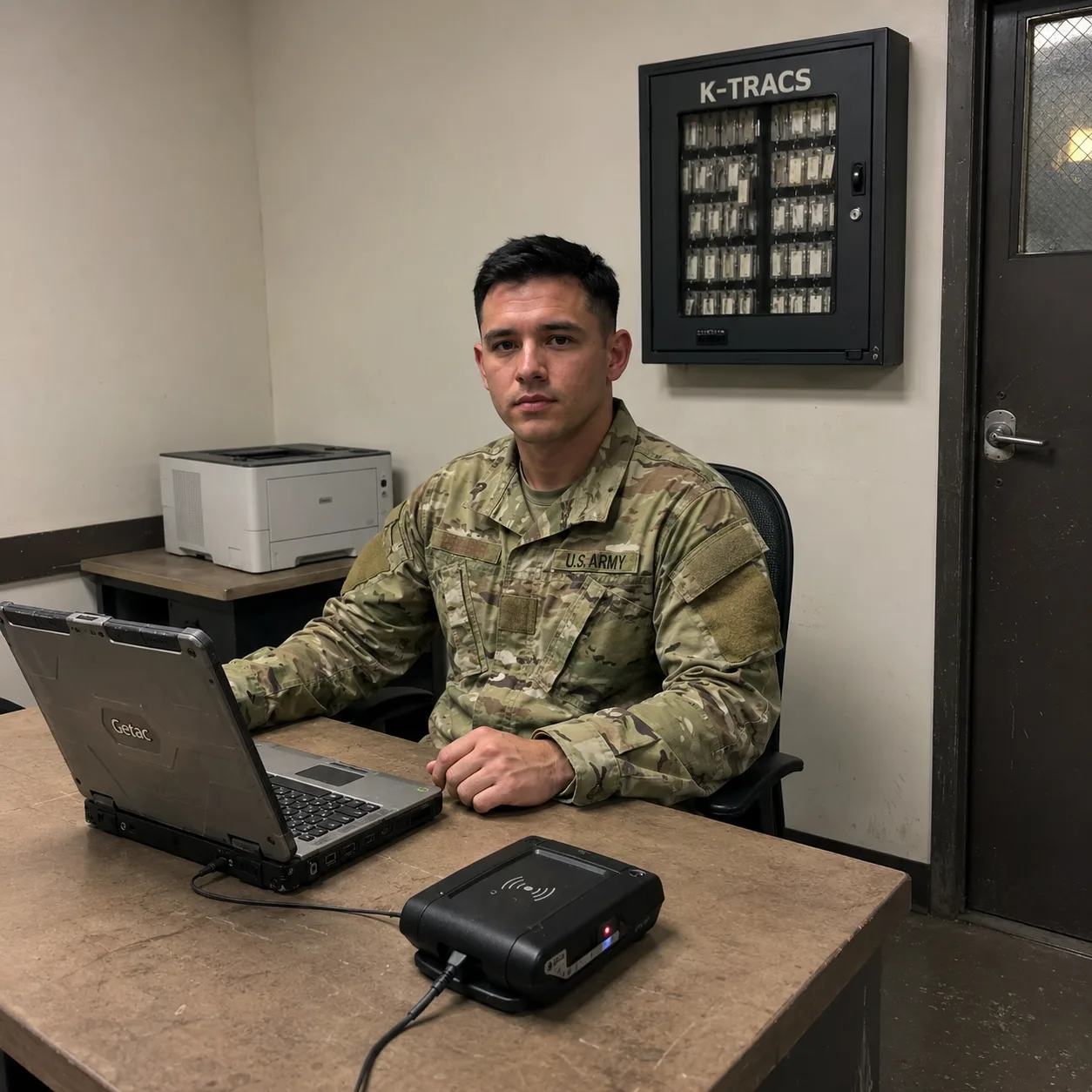
K-TRACS verifies the person before a key or padlock moves — CAC or User ID confirms they're on the authorized list — and alerts the custodian when items are overdue for turn-in or inventory.
- Customer badge + PIN sign-in — automated or manual
- Authorization verified before issue
- Overdue turn-in & inventory alerts
- Return date defaults to issue date
- DA Form 5513 on demand
Key Management
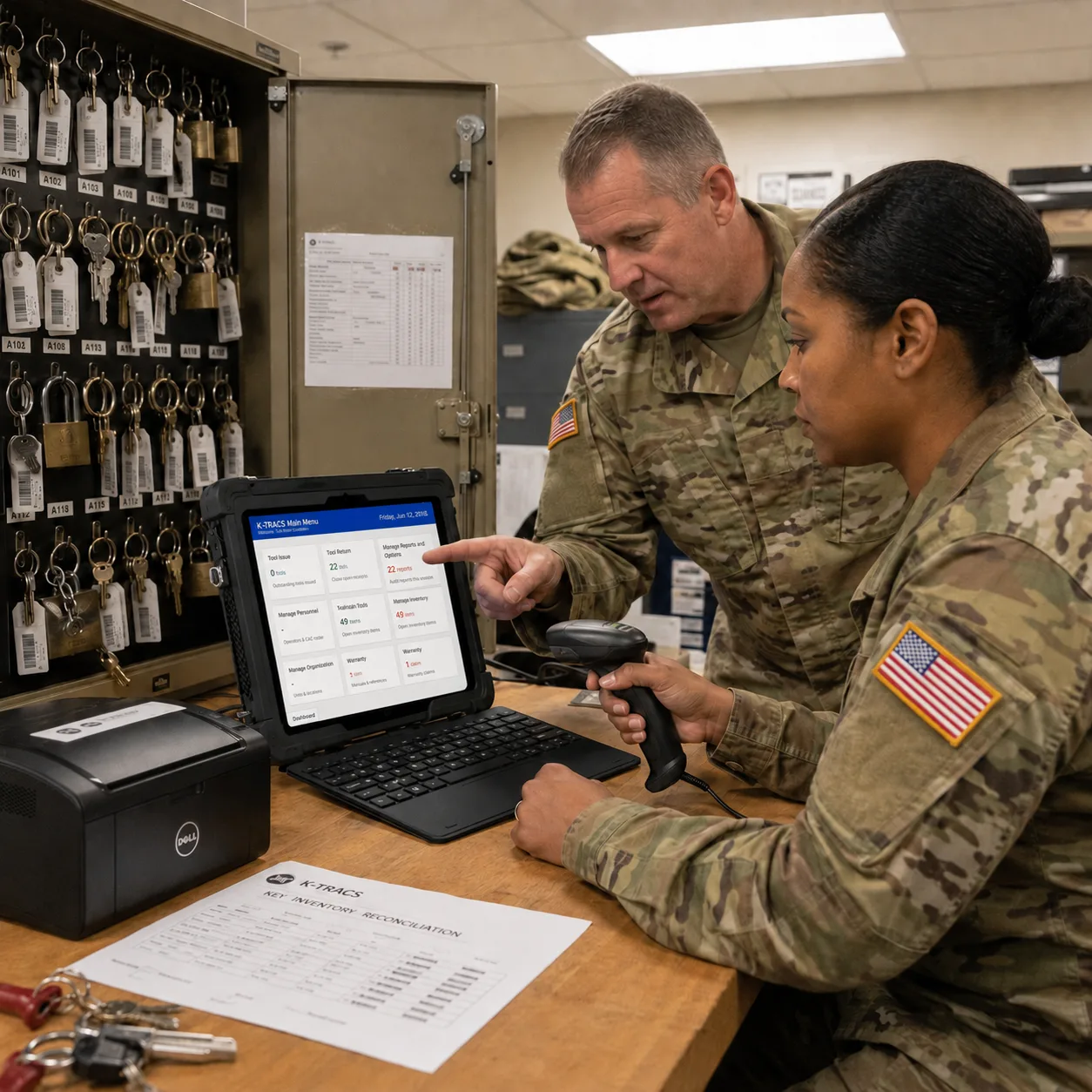
The Key Custodian's Dashboard.
Role-controlled add, modify, and delete for keys and padlocks — location, key box, key type, barcode, and combination on file — with a Main Menu dashboard that surfaces issued items, overdue returns, and inventories due the moment the custodian signs in.
- Role-controlled key & padlock records
- Padlock location and combination captured
- Issued · overdue · inventory-due alerts at sign-in
- Auto upload / update of key list and personnel
- Organization-linked personnel, keys & padlocks
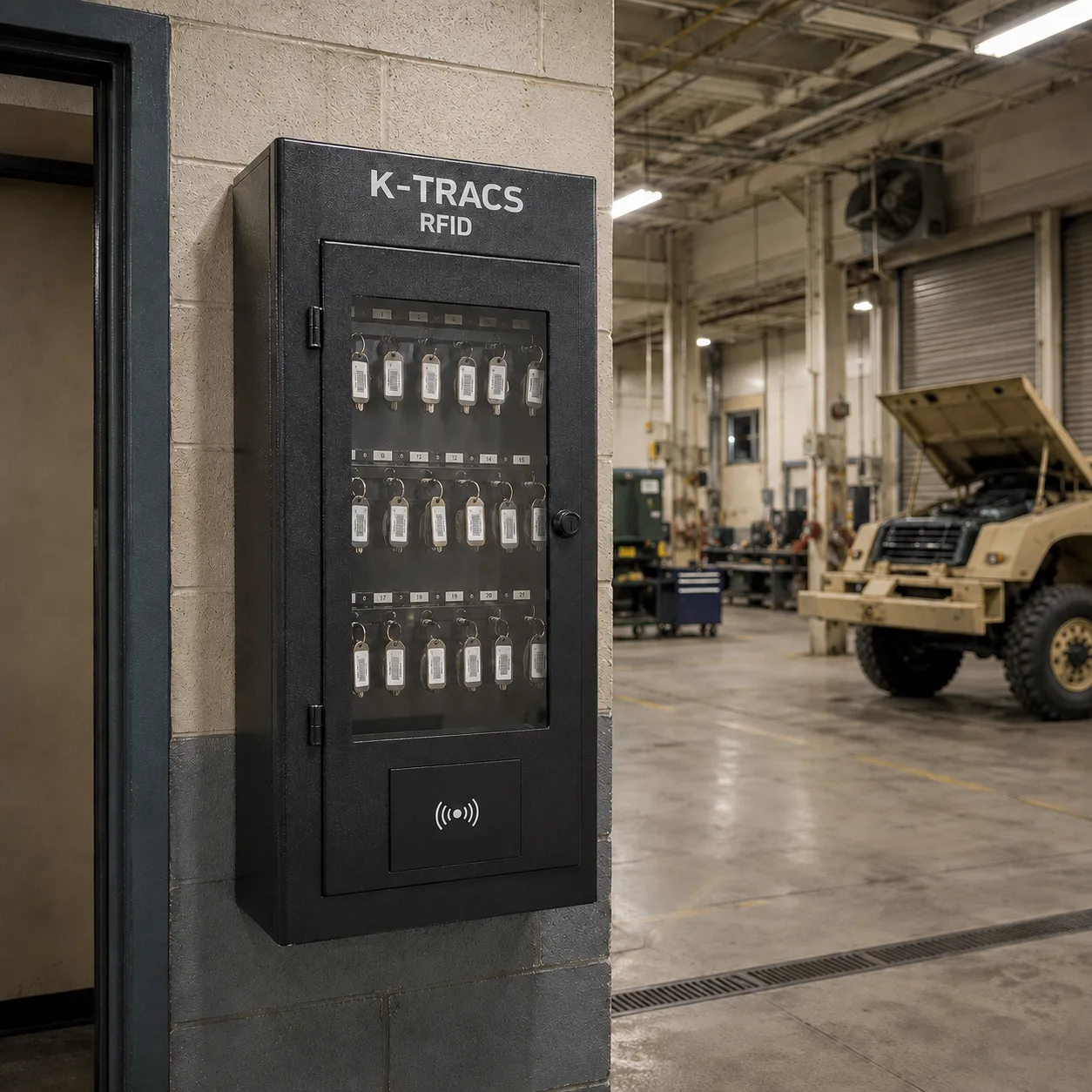
Inventory
Inventory the box in seconds.
Standard Inventory scans key and padlock barcodes; with RFID, the whole key box reads at once — issued items counted as accounted, missing items flagged in red, and the next inventory due date recalculated six months from completion.
- Standard Inventory — barcode-scanned
- Manual Inventory — printed Key List Report, entered results
- RFID full-box sweep in seconds
- Discrepancies highlighted in red
- Next inventory recalculated +6 months
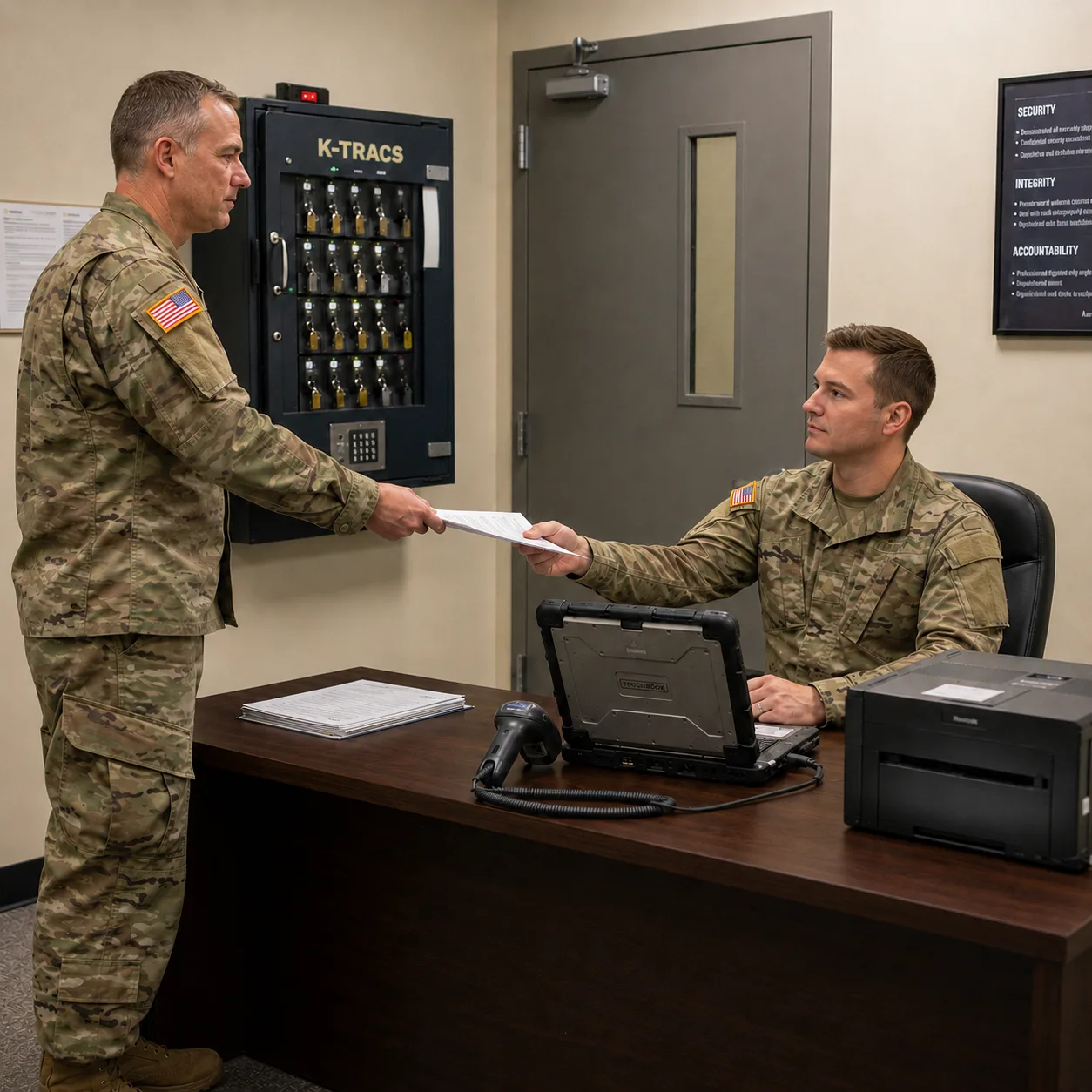
Reports & End of Day
Nine reports. One end of day.
End of Day closes the day — discrepancies captured as EoD Discrepancy Entries with corrective actions, not lost in a binder — and nine key-and-padlock reports export to Excel or PDF.
- DA Form 5513 · End of Day Report
- Standard Inventory Report · Inventory Report List · Inventory Due Report
- Key Catalog · Key List Report
- Personnel Report · Change Report
The standing claim
Always in inspection-ready standing.
By using K-TRACS you stay ready for a Physical Security Key Control inspection — you are always in inspection-ready standing. Every key and padlock issue, receive, inventory, reconciliation, discrepancy, and corrective action is already the record the inspector needs, with real, objective data in place of subjective form reviews.
Deployment fit
Where K-TRACS runs.
Controlled key rooms, evidence rooms, motor pools, plants — wherever keys and padlocks control access, the same person-linked loop holds them accountable.




See K-TRACS on your key and padlock board.
A readiness review maps your workflows, operational risks, and the best-fit control model.